
Aircon chemical wash price in Singapore runs $60 to $120 per wall-mounted unit in an HDB flat and $70 to $140 in a condo. Where you land depends on how dirty the coil is, what kind of unit you have, and how hard the technician has to work to reach the condenser. Chemical wash sits in the middle of the service ladder: routine servicing costs $30 to $50, overhaul costs $150 to $280. Below is what each part of the quote should cost, which surcharges are fair, and which ones get invented on the spot. Rates here reflect what our chemical wash service in Singapore charges this year.
How much does aircon chemical wash cost in Singapore in 2026?
Chemical wash costs $60 to $140 per wall-mounted fan coil unit in 2026. HDB flats sit at the lower end, $60 to $120. Condos run $70 to $140. Ceiling cassettes cost 20% to 40% more because the technician works overhead, and ducted units cost 40% to 60% more.
Single-unit rates:
- Wall-mounted, HDB: $60 to $120
- Wall-mounted, condo: $70 to $140
- Ceiling cassette, HDB: $85 to $165
- Ceiling cassette, condo: $100 to $185
Most HDB homes book more than one unit at a time, which brings the per-unit rate down:
- 2 units in a 3-room flat: $110 to $200, with a 10% discount applied
- 3 units in a 4-room flat: $155 to $290, with 15% off
- 4 units in a 5-room flat: $205 to $380, with 15% to 20% off
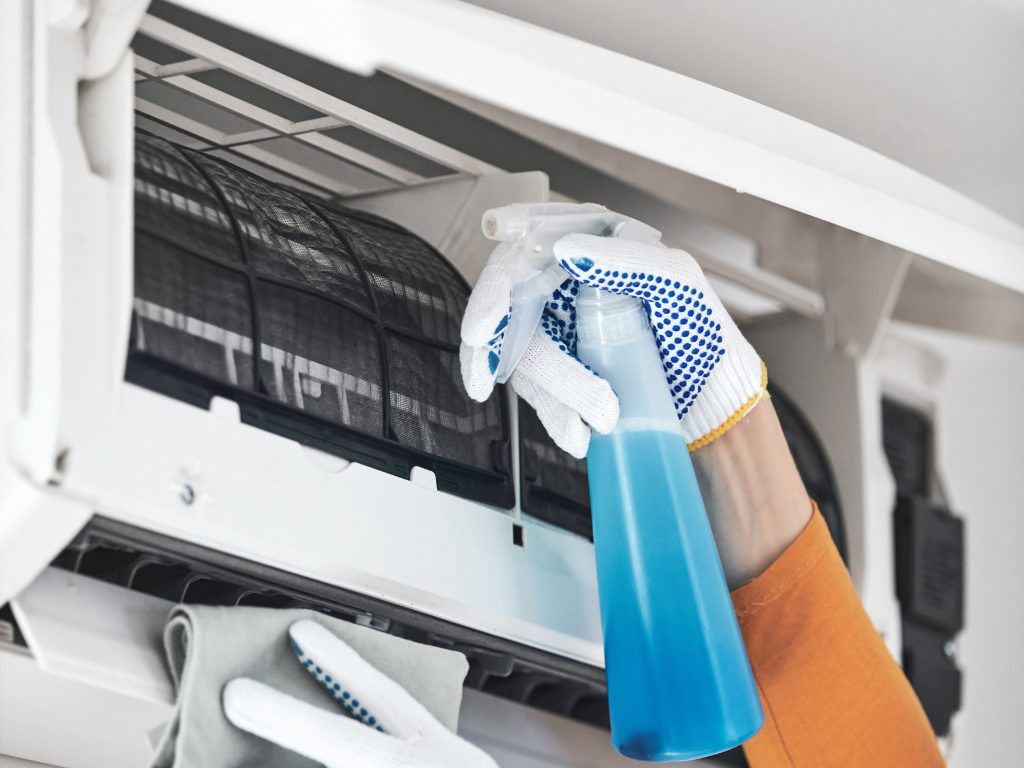
A chemical wash cleans the unit on the wall, without taking it down. Budget 45 to 60 minutes per unit. The technician sprays alkaline coil cleaner at pH 10 to 12 onto the evaporator, lets it sit for 10 to 15 minutes, then rinses with pressurised water. Set that against the wash versus overhaul comparison and you are paying 40% to 60% less for a less thorough clean.
What the price buys: filter clean, chemical spray on the evaporator coil, condensate drain flush, condenser fin clean, and a quick performance check. What it does not buy: dismantling the unit, deep cleaning the blower wheel, or a pressure test. Those belong to the overhaul.
What sets the per-unit chemical wash rate?
Six things move the per-unit rate: what kind of unit you have, whether you live in HDB or a condo, how contaminated the coil is, how the technician reaches the outdoor unit, which tier of contractor you hired, and whether you are on contract.
Unit type matters most. Wall-mounted splits set the baseline rate. Ceiling cassettes need ladder work and an overhead panel removed, so they cost 20% to 40% more. Ducted systems need duct access and cost 40% to 60% more.
Property type adds $10 to $30. Condos come with MCST notification, lift booking, security clearance for the technician, and sometimes a premium residential service fee. None of that applies in HDB.
Contamination costs real time. Heavy biofilm, mould, or a discoloured coil means longer cleaning and sometimes a second chemical application. A $20 to $50 surcharge is fair if the contractor tells you before starting. Sprung on you as the technician packs up, it is not.
Access to the outdoor unit adds $20 to $40 when the condenser sits on a high ledge needing a ladder or scaffolding. Ground-floor units attract nothing extra.
Contractor tier explains most of the spread inside the range. At $60 to $80 per HDB wall-mounted unit, expect skipped pressure checks, lower-grade cleaner, and dwell time cut short. Between $80 and $100 you get standard chemistry and basic verification. Above $100, the technician should be measuring delta-T, documenting coil condition, and handing you a report.
The detailed chemical wash procedure sets out what a proper wash actually involves, which is how you tell a genuinely premium job from a cheap one with a premium price.
Is HDB chemical wash cheaper than condo?
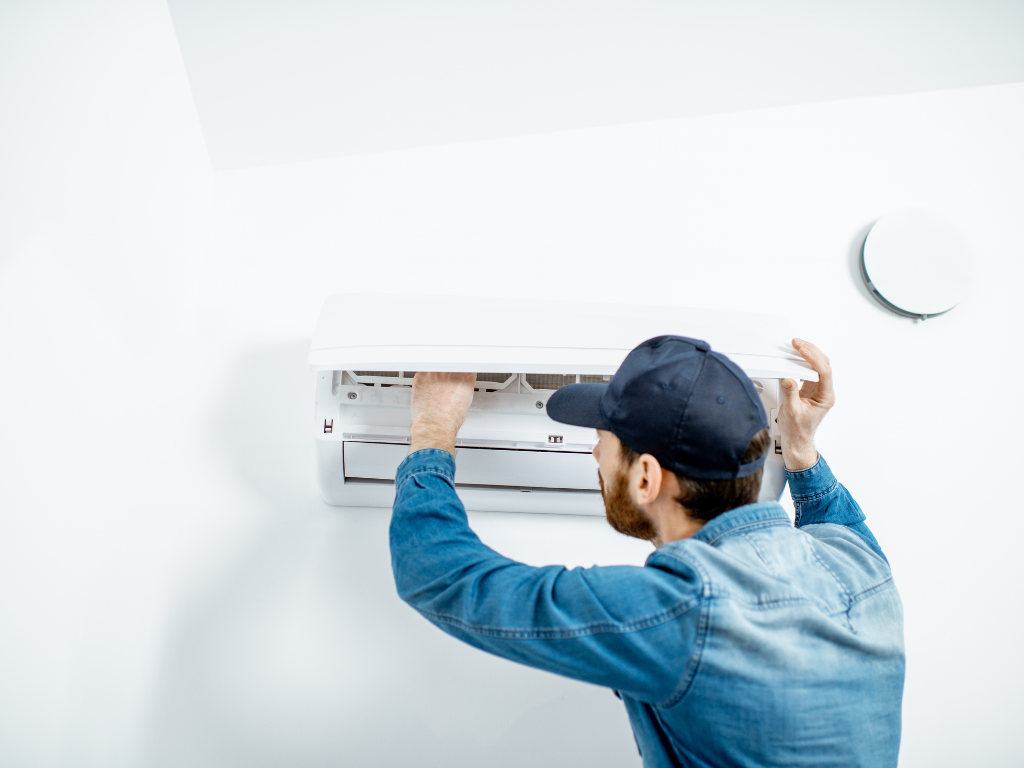
Yes, by $10 to $30 per unit. HDB runs $60 to $120, condo runs $70 to $140. The gap is administrative rather than technical.
Condos want notification to the MCST for any scheduled work over 2 hours. The lift has to be booked through the condo app or the management office, often 1 to 3 business days ahead. Security has to let the technician in. HDB has none of that.
Getting to the condenser can be harder too. Some condo service ledges need an MCST-issued access pass, and high-rise units sometimes need scaffolding. In HDB you reach the service ledge through the bedroom window, no pass, no scaffold.
Contractors price that coordination in. The technical work is identical; the hour someone spends arranging access is not free.
Older prime-district condos in Districts 9, 10 and 11 add another squeeze. Restricted service hours, often 9am to 6pm on weekdays only with no weekend work, limit when contractors can schedule you, and limited scheduling pushes rates up.
The gap is real but it is small. If a contractor quotes you more than $30 above the equivalent HDB rate, ask them to name the condo-specific cost they have built in.
What’s the difference between wall-mounted and cassette pricing?
Ceiling cassettes cost 20% to 40% more than wall-mounted units of the same BTU rating. Ducted systems cost 40% to 60% more. You are paying for access time, not better cleaning.
2026 rates by unit type:
- Wall-mounted split, the baseline: $60 to $140
- 4-way ceiling cassette: $85 to $185
- 1-way concealed cassette: $90 to $200
- Ducted unit: $100 to $220
A wall-mounted unit sits at arm height. The front cover pops off two hand-tightened clips, the filter slides out in half a minute, and the coil is right there for the spray. Nothing gets dismantled.
A cassette means a ladder or step platform. The technician takes off the front panel, drops the fan assembly, then works on the coil from below. That adds 20 to 30 minutes per unit, and working overhead is slower than working at chest height.
Ducted units are concealed, so the technician opens a ceiling access panel, inspects through the duct port, and often reaches the coil awkwardly. Budget another 40 to 60 minutes per unit.
Mixed homes get priced per unit at its own tier. One cassette in the living room plus two wall-mounted in the bedrooms, a common 4-room HDB layout, typically comes to $195 to $380 depending on the brand.
What is a contamination surcharge on chemical wash?
A contamination surcharge is what a contractor adds for a coil that needs extended cleaning, usually heavy biofilm, mould, or discolouration. In Singapore in 2026, $20 to $50 per affected unit is the going rate.
Fair reasons to charge it:
- Black mould visible on the evaporator fins, which needs extra rinse cycles
- Biofilm heavy enough to need a second chemical application
- Rust or copper oxide deposits needing specialised treatment
- A blocked condensate drain that takes extended flushing
Reasons to push back:
- The surcharge appears at the end of the visit. A pre-service inspection should have caught it.
- The technician says “heavy contamination” but cannot show you anything.
- The surcharge goes above $80 with no documentation behind it.
- Every unit in a multi-unit visit gets surcharged. Whole flats rarely contaminate evenly.
Protect yourself by asking the technician to show you the coil before you agree to anything extra. Photographing contamination is normal practice on a legitimate surcharge. A technician who will not show you either does not have a case, or works for a contractor who documents nothing.
Some contamination is past the point where a wash helps at all. Cooling with delta-T below 6°C, odour that survives a clean, or ice forming on the evaporator all point to overhaul. Upgrade the service rather than pay a surcharge on a wash that will not fix it.
The Consumers Association of Singapore (CASE) has logged complaints about undisclosed surcharges in home services. An itemised quote up front is what stops that argument happening.
Contract servicing vs one-off: which is cheaper?
Contract servicing at 4 visits a year works out to $60 to $80 per visit. Booking the same visits one at a time costs $80 to $120 each. On a single-unit home that is $80 to $160 saved over the year, and multi-unit homes save more.
On contract, a single HDB unit runs $240 to $320 for the year. A 3-unit 4-room flat runs $700 to $900, or $175 to $225 per visit with the multi-unit discount already applied. The package normally covers 4 chemical wash cycles, delta-T verification, filter replacement and a drain flush.
Book the same four visits one-off and the single unit costs $320 to $480 a year. The 3-unit flat costs $780 to $1,160. Annual saving from contract: $80 to $280 depending on how many units you have.
Price is not the only difference. Contract customers usually get preferred time slots, which matters in June and December when everyone books at once. You also get the same technician team, who learn the quirks of your units, and a maintained service history that helps with warranty claims and resale. Callbacks tend to move faster for contract holders.
The trade-off is commitment. You are tied to one contractor for 12 months, cancellation usually needs 30 to 60 days’ notice, and if their quality slips halfway through, getting out is awkward.
Planning three or more washes a year? Contract wins on both cost and hassle. Fewer than that and you are better off staying flexible.
What multi-unit discounts should I expect?
Multi-unit discounts run from 10% on two units to 20% on five or more. The standard structure is 10% for 2 units, 15% for 3 to 4, and 20% for 5 and up.
On a typical 4-room HDB flat with three wall-mounted units, a contractor charging $80 per unit quotes $240 before discount. The 15% tier takes $36 off, so you pay $204. A higher-tier contractor at $100 per unit quotes $300, discounts $45, and lands at $255.
The discount only applies when everything gets serviced on one visit. Doing the living room this month and the bedrooms next month duplicates the setup, so contractors will quote each visit at the single-unit rate.
It also does not apply to overhauls, which carry their own discount structure, to emergency same-day bookings, or to extras added on the day like filter replacement or coil coating.
Five-unit landed homes and executive flats qualify for the full 20%, though base rates often start higher because the job blocks out a full day. Expect $600 to $1,100 for the package.
If you are weighing the lighter option, the wash versus general servicing comparison covers what general servicing includes. It qualifies for the same multi-unit tiers.
Do condenser access issues change the price?
Yes. Reaching an awkward outdoor unit adds $20 to $60 per visit, depending on what the technician needs to get there safely. Standard ledge access costs nothing extra.
What each scenario adds:
- Condenser on the service ledge, reached through the bedroom window: no surcharge
- 8th floor and above, technician needs a safety harness: $20 to $30
- Condo condenser the balcony does not reach, needing facade scaffolding: $40 to $60
- Ducted outdoor unit at roof level: $30 to $50 for roof access
HDB sets rules on how service ledges may be accessed, and the HDB MyNiceHome guidance on aircon maintenance for home owners covers them.
Live high up or have your condenser somewhere unusual? Ask the contractor to confirm the access method while they are quoting. A surcharge you knew about is legitimate. One that appears when the technician sees the ledge for the first time means they quoted without asking.
How is chemical wash priced differently from overhaul?
Chemical wash costs $60 to $140 per unit. Chemical overhaul costs $150 to $280. The unit comes off the wall for an overhaul and stays on for a wash, which is the whole reason for the 2 to 3 times gap.
The three service tiers:
- General servicing: $30 to $50, around 30 minutes
- Chemical wash: $60 to $140, 45 to 60 minutes
- Chemical overhaul: $150 to $280, 3 to 5 hours
A wash is enough for light to moderate biofilm, mild odour, and slightly weak cooling, meaning delta-T in the 8 to 12°C band, on a unit that has had an overhaul within the last three years.
Go to overhaul when the biofilm is thick, the odour survives cleaning, cooling has dropped off properly with delta-T under 6°C, the indoor unit is dripping water, or it has been three years or more since the last overhaul.
Getting this wrong costs money in both directions. Book an overhaul when a wash would have done and you overspend by $90 to $140 per unit. Book a wash when the unit needed an overhaul and you pay twice, because the wash will not fix it and you will book the overhaul anyway a month later.
Not sure which one you need? A diagnostic inspection costs $80 to $150, which is less than the money you lose guessing wrong.
Getting the quote right before you book
Chemical wash in Singapore in 2026 costs $60 to $140 per wall-mounted fan coil unit, split between $60 to $120 for HDB and $70 to $140 for condo. Cassettes add 20% to 40%, ducted units add 40% to 60%. Booking two or more units at once takes 10% to 20% off, and a 4-visit contract saves $80 to $280 a year against booking one-off. Contamination surcharges of $20 to $50 are fair when the contractor raises them before starting work, and a warning sign when they raise them after.
Book an aircon chemical wash with SACES and the quote arrives itemised: per-unit rate, multi-unit discount applied, any access surcharge, and the threshold at which a contamination surcharge kicks in. Agreeing all of that in writing before the technician arrives is what keeps the final bill matching the quote.
FAQs About Aircon Chemical Wash Price Singapore
Are cheap $30 chemical wash quotes legitimate?
No. At $30 you are buying general servicing, a filter clean and a quick coil spray in about 30 minutes, with the wrong label on it. A real chemical wash uses alkaline coil cleaner at pH 10 to 12, gives it dwell time, then rinses, and takes 45 to 60 minutes. The genuine rate is $60 to $140 per unit in Singapore in 2026. Under $50 for a full wash means something got skipped.
How often should I get aircon chemical wash?
Every 4 to 6 months for a Singapore home running the aircon regularly. Drop to every 3 months if you have pets, someone smokes indoors, or you live near the coast or an industrial area. A guest room or holiday-home unit can stretch to 8 or 12 months. Leave it past a year and biofilm builds to the point where a wash no longer clears it and you are booking an overhaul instead.
Is contract servicing worth it in Singapore?
Worth it if you are booking three or more visits a year. Contract rates of $60 to $80 per visit against one-off rates of $80 to $120 save you $80 to $160 annually on a single unit, and more across multiple units. The same technician team turning up each time, plus priority slots during peak months, is worth something on top of the cash saving.
What should I ask before authorising a chemical wash quote?
Ask whether the quote covers chemical wash or general servicing, since the two get confused deliberately. Then: what is the per-unit rate, is the multi-unit discount already applied, what does the base rate include (filter clean, drain flush, delta-T verification), is there an access surcharge, and at what point would a contamination surcharge apply. Any contractor worth booking will put all of that in writing.
How long does a chemical wash appointment take?
A single wall-mounted unit takes 45 to 60 minutes. A ceiling cassette adds 20 to 30 minutes for the overhead work. A 3-unit package in a 4-room HDB flat takes 2 to 3 hours including setup and cleanup. A team that has serviced your flat before will usually be quicker, since they already know where everything is.