
You just serviced the unit, but it still smells musty. Or it cooled fine for a week, then faded again. The real question isn’t what a chemical wash is. It’s whether you actually need one, or whether another round of general servicing would do the job for half the price.
This guide answers that directly. You’ll get a quick yes/no checklist, a side-by-side of when aircon chemical wash Singapore is the right call versus when general servicing is enough, and the symptoms that separate the two. Then, lower down, the technical detail on what the process involves.
Most homeowners don’t need a chemical wash on a schedule. They need it when a specific pattern shows up: the same problem keeps coming back after normal servicing.
Run through these six questions. Answer honestly based on the last month, not what you hope is true.
Scoring: Three or more yes answers usually means the contamination sits deeper inside the indoor unit than brushing and vacuuming can reach. That’s chemical wash territory. One or two yes answers, and a thorough general service is often still enough. If you’re at three-plus, a chemical wash service is the more cost-effective move than paying for repeated light servicing that doesn’t hold.
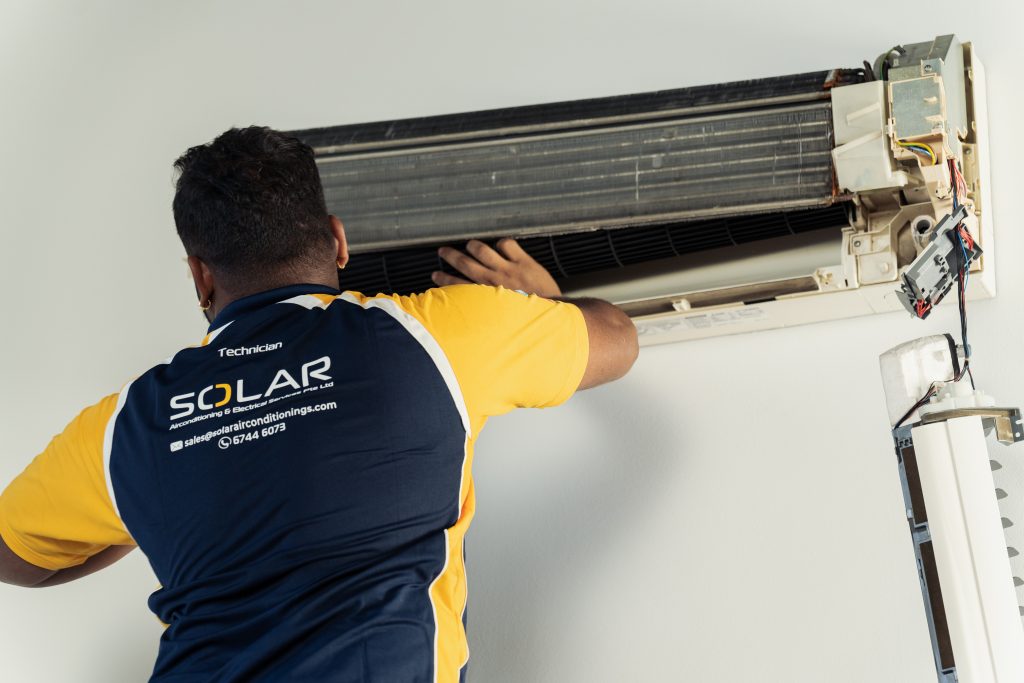
The two services solve different problems. General servicing handles surface dirt and routine upkeep. Chemical wash targets internal buildup that’s already hurting performance. Paying for the wrong one is the most common way Singapore homeowners waste money on aircon maintenance.
| Situation | General servicing is enough | Chemical wash is the right call |
| Dirt type | Loose surface dust on filter and coil face | Sludge, mould film, sticky compacted dirt inside the coil and blower |
| Cooling | Cools well, just routine upkeep due | Weak cooling that returns days after a normal service |
| Smell | No persistent odour | Musty smell that comes back after the filter is cleaned |
| Leakage | No leaks, or a one-off minor choke | Repeated leakage despite drain-line flushing |
| Airflow | Normal airflow | Weak airflow even with a clean filter |
| Time since deep clean | Serviced regularly, within interval | Over 18 to 24 months, or unknown history |
| Typical cost position | Lower, routine | Higher, but resolves the root cause |
The pattern is recurrence. If a problem returns quickly after general servicing, the issue is service depth, not service frequency. A second cheap service doesn’t fix a depth problem.
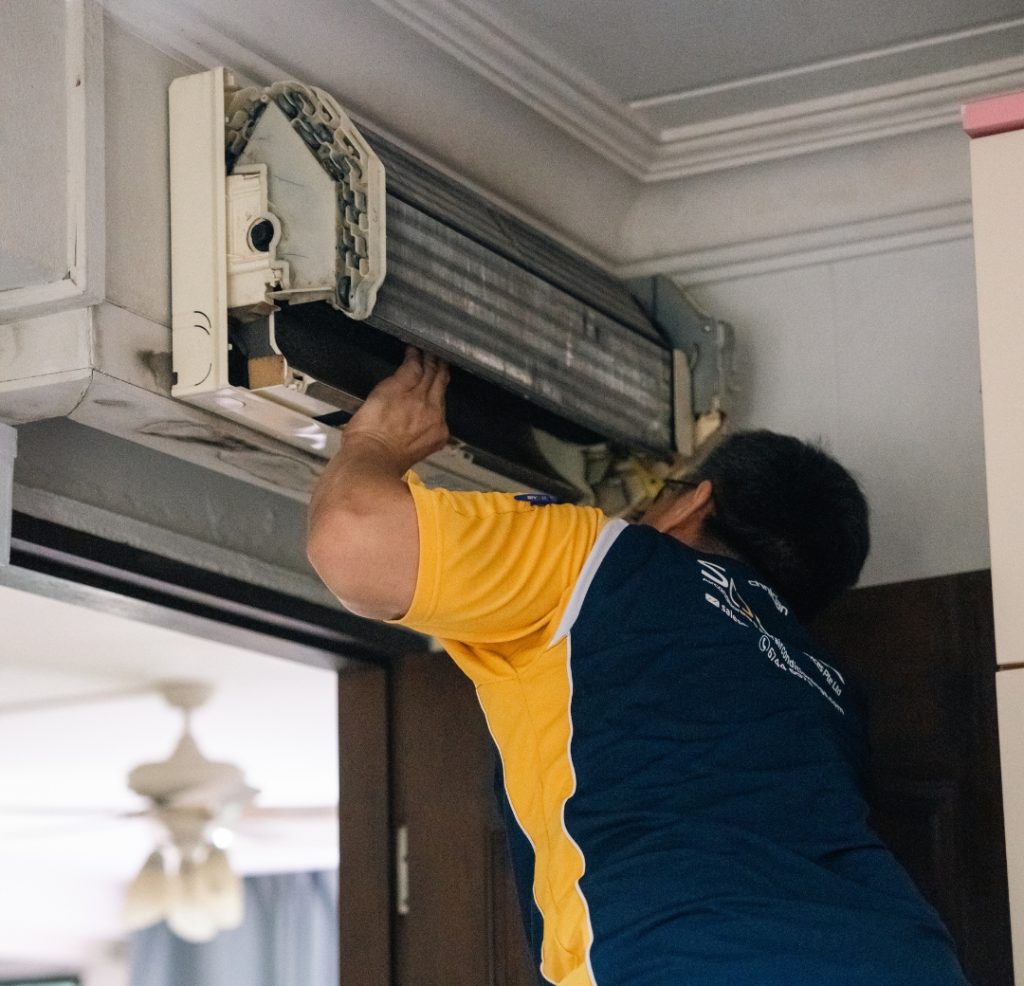
Singapore’s climate keeps aircon systems working hard all year. In humidity, the indoor coil stays wet during operation, which makes it easy for dust, fine particles, and biofilm to stick over time. That’s why internal contamination builds faster here than in drier climates.
When the evaporator coil is coated, heat transfer drops. The air may still feel cool, but the room takes longer to cool, the fan seems weaker, and the compressor works harder. ASHRAE notes that very low airflow can cause the evaporator coil to freeze, which worsens cooling and can damage the compressor if left unresolved. This is the clearest case where a chemical cleaning service restores performance better than another round of light servicing.
A stale smell is rarely fixed for long by spraying fragrance or wiping the cover. It usually comes from damp contamination inside the evaporator area, drain pan, or blower wheel. EPA’s mold and health guidance states that mold exposure can irritate the eyes, skin, nose, throat, and lungs, and can trigger asthma attacks in people with mold allergy. Not every smelly unit is a health emergency, but persistent mould odour shouldn’t be brushed off as normal aircon smell. Chemical wash works here because it targets the wet internal surfaces where the smell actually forms.
General servicing can clear a basic choke in the drain line. It may not be enough when sludge has collected inside the drain pan or around the coil and blower housing. Some leaking units just need an internal deep clean. Others have reached the stage where dismantling is the safer fix. If the problem started as weak cooling and later turned into dripping, the aircon not cold troubleshooting guide is a useful supporting read, since blocked airflow and drainage issues often show up together.
General servicing is the right baseline. It shouldn’t be oversold as a cure for every fault. It covers filter cleaning, indoor coil brushing, drain pan and drain line vacuuming, outdoor condenser cleaning, and performance checks. That’s good maintenance. It is not the same as deep restoration of a choked indoor unit.
A practical way to judge it is to watch what changes within 1 to 2 weeks of a service:
Chemical wash is not a cure for every “not cold” complaint. If the fault comes from refrigerant leakage, a faulty sensor, a PCB issue, a compressor problem, or a condenser-side fault, cleaning alone won’t solve it. Repair work should involve pressure checks, fault diagnosis, and component testing before anyone recommends gas top-up.
Be careful with contractors who jump straight from “not cold” to “top up gas.” Refrigerant doesn’t get used up under normal operation. If gas is low, there’s usually a leak somewhere in the system.
The most common fit is the wall-mounted indoor unit that leaks, smells, or has noticeably weaker airflow even after normal cleaning. This is the typical HDB and condo case.
When an aircon produces a damp smell in bedrooms or living areas, comfort drops fast. In family homes, the problem gets attention earlier because rooms are occupied for long hours, especially at night. Chemical wash is often the right middle step before jumping to overhaul or replacement.
Office units accumulate wear differently. Long operating hours increase moisture load, dust intake, and internal fouling. A small office unit may look fine outside while suffering from dirty internal components that drag cooling down during work hours. NEA’s ventilation and indoor air quality guidance reinforces the importance of proper maintenance of air-conditioning systems in occupied spaces.
Now the definition, once you know whether you need one.
An aircon chemical wash is a deeper cleaning process used when the indoor unit has built-up sludge, mould film, sticky dust, or drainage contamination inside the evaporator section. For most homes, the first step is still proper aircon servicing and chemical wash services at the general level, which handles surface dirt, filter blockage, and routine drainage cleaning. Chemical wash sits one level deeper, for internal contamination that ordinary brushing and vacuuming can’t clear.
The key components involved are the evaporator coil, blower wheel, drain pan, and drainage path. When these are dirty, the unit still turns on, but heat exchange drops, airflow weakens, condensation stops draining properly, and odour builds. That’s why homeowners often say the unit is “working, but not right.”
These are not the same service depth. SACES separates them clearly:
A non-dismantle deep clean is usually the right call when the indoor unit is contaminated but still structurally manageable without full restoration. A chemical overhaul is the heavier intervention when the unit is severely choked, persistently leaking, or in visibly poor internal condition. Homeowners often use both terms loosely, but the difference is real: it’s about contamination level and unit condition, not marketing tiers.
A chemical wash is a diagnostic decision, not a premium cleaning package. The contractor needs to tell whether the fault sits in airflow restriction, internal contamination, drainage blockage, refrigerant loss, or electrical failure. That requires experience with Singapore homes, small offices, and the way HDB and condo layouts affect drainage and service access.
SACES is a Singapore-based air-conditioning and electrical contractor serving residential and small commercial systems, with over 30 years of experience and certifications including bizSAFE STAR and ISO 45001. Chemical cleaning is only worth paying for when the diagnosis behind it is right.
You need an aircon chemical wash when the problem sits inside the indoor unit and normal servicing is no longer clearing it. Poor airflow, musty smell, repeated leakage, and weak cooling after a recent service are the signs that matter most. If your checklist score was one or two, start with a thorough general service. If it was three or more, go deeper.
If you’re confident the symptoms point inside the unit, book a chemical wash and get the service depth right the first time.
Watch what happens within 1 to 2 weeks of a normal service. If cooling fades, smell returns, or leakage comes back, the contamination is deeper than general servicing reaches, and a chemical wash is the better call. If the unit stays stable, general servicing was enough.
It’s a deep cleaning process for the indoor unit, especially the evaporator coil, blower, and drain pan. It’s used when a normal service can’t clear internal dirt, mould film, poor airflow, or recurring leakage.
It can if poor cooling is caused by a dirty evaporator coil or restricted airflow. It won’t solve compressor faults, refrigerant leaks, or PCB issues. Those need troubleshooting and repair, not cleaning.
There’s no fixed schedule. For most well-maintained units, every 18 to 24 months is typical. The real trigger is recurring symptoms after general servicing, not the calendar. High-use systems in Singapore’s humidity may need it sooner.
No. Chemical wash is non-dismantle deep cleaning. Chemical overhaul is a dismantle restoration for heavily choked or leaking units. The difference is service depth and unit condition.