
Home aircon servicing Singapore keeps your unit cooling in 30°C humidity instead of dripping onto the bed at 2am. Most homeowners book it too late or pay for chemical washes they don’t need. This blog walks you through what’s covered under home aircon servicing, how often it’s actually needed, and the mistakes that quietly kill your compressor.
What home aircon servicing in Singapore actually covers
Standard servicing and chemical wash are not the same job. Treating them as interchangeable is how homeowners overpay or end up with a unit that still smells musty after a fresh visit.
A general service handles the indoor unit and drainage path. The technician removes and washes the front cover and air filter, vacuums the fan barrel, wipes down the evaporator coil, flushes the drainage line under pressure, and checks gas pressure on the outdoor condenser. The cooling cycle should stabilise within five to ten minutes of restart. For a single split or System 3 setup in a four-room HDB, expect 30 to 45 minutes per indoor unit when the work is done properly. Quoted aircon servicing rates should reflect this scope. Anything finished in half the time usually means corners were cut.
A chemical wash is a deeper job. It’s reserved for indoor units choked with dust, biofilm, or mould that won’t come off in a surface clean. The technician dismantles the fan coil, soaks the evaporator coil and fan barrel in chemical solution, rinses thoroughly, and reassembles. The trigger isn’t a calendar date. It’s a symptom set: weak airflow despite a clean filter, persistent musty odour after servicing, ice forming on the evaporator coil, or visible discharge from the drainage tray. The practical signs your aircon needs a chemical wash are clear once you know what to watch for. For units that haven’t been opened in two to three years, the aircon chemical wash service is usually the right starting point rather than another light service that can’t reach the dirt.
Two things to verify were actually performed during a basic visit:
- The drainage line was flushed under pressure, not just wiped at the tray
- The evaporator coil was rinsed if there was any visible discoloration or biofilm
A 15-minute “service” that leaves the filter looking dusty wasn’t a service. If you suspect that’s what happened, an independent aircon inspection confirms whether the unit was opened and cleaned properly or just surface-wiped.
How often you should service your home aircon
The clean answer is “depends on usage and system type.” That’s true but unhelpful, so here’s the practical breakdown for Singapore households.
For a typical HDB or condo home running aircon 6 to 8 hours daily, mostly at night, the standard residential aircon servicing schedule looks like this:
- General servicing every 3 to 4 months
- Chemical wash every 18 to 24 months, depending on dust load
- Drainage line check every visit, since most leakage problems start there
Heavier users running aircon 10+ hours daily, especially homes with pets or smokers, should tighten the interval to every 2 to 3 months for general servicing and every 12 months for chemical wash. Light users with holiday homes or guest rooms used only on weekends can stretch general servicing to every 6 months, but no longer. Stagnant condensate breeds bacteria, and the longer a unit sits without running, the worse the first start-up smells.
| System type | Common HDB/condo setup | General service frequency |
| Single split | Studio, master bedroom only | Every 3 to 4 months |
| System 2 | 3-room HDB | Every 3 to 4 months |
| System 3 | 4-room HDB or small condo | Every 3 months |
| System 4 | 5-room HDB or 3-bedroom condo | Every 3 months |
| Ducted system | Penthouse, landed property | Every 3 months plus annual duct inspection |
Inverter and R32 units aren’t immune. Inverters run more efficiently at part-load, but the indoor unit collects just as much dust in Singapore’s air. R32 refrigerant doesn’t change the servicing interval, only the gas top-up procedure.
There’s a seasonality point most homeowners miss. May to July is the heaviest aircon load period in Singapore. If your last service was in November or December, you’ll usually hit a problem in the middle of the hottest stretch. Contractors are typically booked solid by June. Service in March or April if you can.
The other practical question is whether to do one-off bookings or commit to a contract package. The comparison of one-off versus contract servicing covers the financial logic and which option makes sense for which household.
A real home aircon maintenance checklist
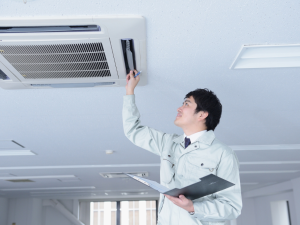
This is the home aircon maintenance checklist that actually keeps a unit healthy, split into what you can do yourself and what needs a technician.
Homeowner side, no tools required
- Wash the air filters in soapy water (every 2 weeks if you have pets, every 4 weeks otherwise)
- Wipe the front cover and intake grille with a damp cloth
- Listen for rattling, dripping, grinding, or buzzing sounds when the unit starts up
- Check that air comes out cold within 5 minutes of switching on
- Watch for ice on the indoor coil, which signals low gas or a blocked filter
- Check the drainage outlet on the HDB ledge or condo external wall for a steady drip when the unit is running
Technician side, every 3 to 4 months
- Fan coil flushing
- Evaporator coil rinse
- Drainage line pressurised flush
- Gas pressure check on the outdoor condenser
- Visual inspection of fan capacitor, control board, and PCB for moisture damage
- Tightening of electrical connections at the indoor unit
If the technician skips any of the above on a routine visit, you got partial work. The standard scope is non-negotiable for a home aircon servicing routine that protects the compressor.
What most homeowners get wrong
Five mistakes I see weekly across HDB and condo jobs.
Booking servicing only when something breaks
By the time the unit is leaking or no longer cooling, the damage is already done. Mould has colonised the drainage tray, the evaporator is choked, and the compressor has been working harder for months. Reactive servicing costs more in chemical washes and gas top-ups than scheduled servicing ever does.
Buying a chemical wash for every unit, every visit
Chemical wash is for symptom resolution and deep-clean intervals, not routine maintenance. If a contractor recommends chemical wash on every unit in a one-bedroom condo every 6 months, ask why. Most properly serviced units only need chemical wash every 18 to 24 months.
Ignoring drainage symptoms
A drip from the indoor unit isn’t a quirk. It means the drainage line is partially blocked, the gradient is wrong, or the drainage pan has algae. Left alone, it ends with water staining the wall, ceiling, or laminate flooring. Catching it during a normal service costs nothing extra. Letting it run for two months turns it into a repair job.
Skipping the outdoor condenser
The condenser sits on the HDB ledge or condo AC platform getting blasted by sun, rain, and dust. Servicing the indoor unit but never inspecting the condenser is like cleaning the engine but never touching the radiator. If your unit isn’t cooling, the cause is often outdoor, not indoor. The diagnostic steps in aircon not cold troubleshooting show how to isolate the source.
DIY chemical wash
Online tutorials make it look manageable. The actual risks are gas leaks, electrical shorts, refrigerant contamination, and a compressor seizure that can cost S$800 or more to replace. There is no reasonable DIY version. If symptoms point to a chemical wash or compressor issue, aircon repair and troubleshooting handled by a certified technician is the only safe route.
How to verify a legitimate aircon contractor in Singapore
Singapore doesn’t issue a single “BCA license” specifically for aircon contractors as a category, even though “BCA licensed aircon contractor Singapore” gets searched constantly. The credentials that actually matter are different, and they’re worth checking before you hand over your home keys.
Refrigerant Practitioner certification
Anyone handling refrigerants like R32, R410A, or legacy R22 is required to be certified under NEA’s refrigerant management framework. The training is delivered through BCA Academy’s Refrigerant Practitioner course, which is where the “BCA licensed” phrasing in homeowner forums originated. In practice, ask for the technician’s Refrigerant Practitioner certification.
Licensed Electrical Worker (LEW)
Any fixed electrical work, including new aircon circuits or isolator installation, must be carried out or supervised by an EMA-licensed electrical worker. For routine servicing this isn’t always relevant, but for installation or replacement it absolutely is.
ACRA registration and a verifiable UEN
A real contractor has a UEN you can check on BizFile and a registered business address. Cash-only outfits with no UEN aren’t worth the risk on a S$2,000 unit.
Awareness of Singapore’s refrigerant phase-down
R22 imports were banned years ago and R410A is being progressively restricted under the Kigali Amendment. A contractor recommending R22 top-up on an old unit in 2026 is either uninformed or working around regulations. Both are problems.
These four checks take about ten minutes online. They save you from the kind of contractor who disappears after charging for a chemical wash that wasn’t done. Once you’ve vetted who’s coming into your home, book a servicing visit before peak season hits and the calendar fills up.
Conclusion
A clear scope, a realistic frequency, and a contractor whose paperwork matches their claims solve most home aircon problems before they start. Regular servicing isn’t about the visit itself. It’s about keeping cooling consistent and the compressor alive past the eight-year mark. Most failures are preventable with one extra service per year and one less unnecessary chemical wash.
If you’re due for a service, get started with a scope that matches your unit count and usage pattern, then book your home aircon service before the May to July rush. SACES handles HDB, condo, and small commercial servicing across Singapore with certified technicians and transparent pricing.
FAQ About Home Aircon Servicing Singapore
How often should I service my home aircon in Singapore?
For most HDB and condo households running aircon 6 to 8 hours daily, every 3 to 4 months is the standard interval for general servicing. Heavy users with pets or longer runtime should shorten to every 2 to 3 months. Light users can stretch to every 6 months, but no longer.
Is chemical wash necessary every year?
Not usually. A properly serviced indoor unit only needs a chemical wash every 18 to 24 months, sometimes longer. The trigger is symptoms like weak airflow, persistent musty odour, ice on the evaporator coil, or water dripping from the indoor unit. If a contractor recommends chemical wash every visit, ask what symptoms they’re solving.
What’s included in a basic home aircon service in Singapore?
A proper general service covers filter washing, fan barrel vacuuming, evaporator coil rinse, drainage line flush, and gas pressure check on the outdoor condenser. Expect 30 to 45 minutes per indoor unit. Anything finished in 15 minutes that leaves a dusty filter is incomplete work, not a discount.
Do I need a BCA-licensed aircon contractor?
Singapore doesn’t issue a specific BCA license for aircon contractors. The relevant credentials are NEA Refrigerant Practitioner certification (with training run by BCA Academy) for refrigerant handling and EMA Licensed Electrical Worker for fixed electrical work. Ask for both before any installation, replacement, or chemical wash job.
When is the best time of year to service my aircon in Singapore?
March or April, before the May to July heat peak. Aircon contractors in Singapore are typically booked solid by June, and emergency call-outs cost more. Servicing in early Q2 means your unit is ready when it’s running 10+ hours daily and the compressor is under the heaviest load.