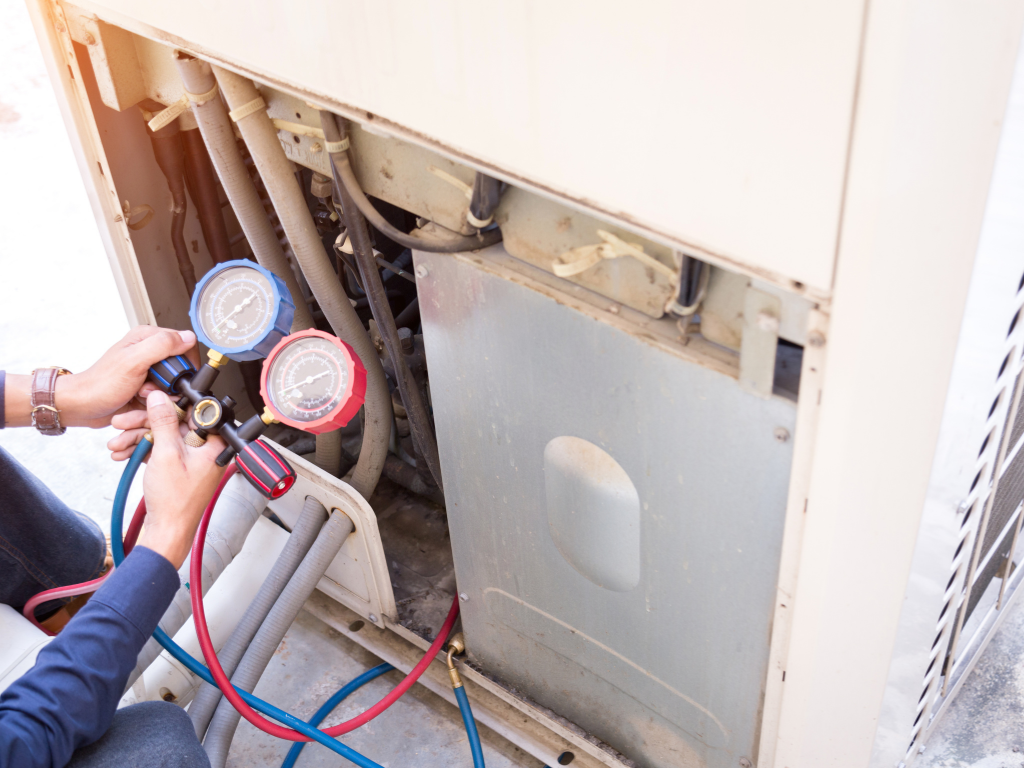
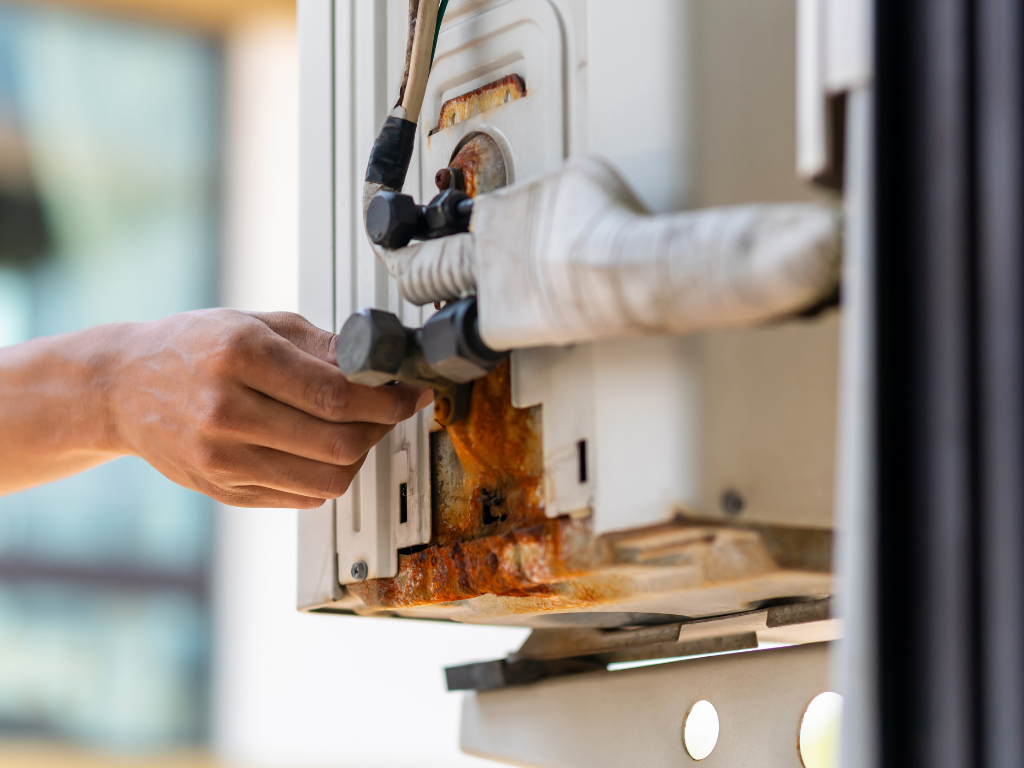
Mid-year aircon check-up Singapore is the inspection that prevents the late-May breakdown call. Temperatures rise from April, humidity sits at 80%, and every aircon in the country runs twice as long per day from May onward. This blog will walk you through what to inspect before June heat hits, anchored to regularaircon servicing across Singapore.
Why mid-year matters more than people think
Singapore doesn’t have winter or summer. What it has is heat-load peaks. From April through June, daytime highs climb to 33 to 35°C, humidity stays at 75 to 85%, and aircons run 8 to 12 hours a day instead of 4 to 5. Every component inside the indoor and outdoor units is suddenly working at a level it wasn’t tested for during the cool months. The Meteorological Service Singaporeclimate of Singapore overview shows May and June consistently among the hottest months of the year.Three things change when ambient temperature climbs.Refrigerant pressure rises. R32 head pressure climbs roughly 3 to 4% per 1°C of ambient temperature increase. A unit that ran fine at 28°C ambient can struggle at 34°C because head pressure pushes past compressor design tolerance. This is refrigerant pressure rise in action, and it accelerates compressor stress every hot day the system runs continuously.Cooling cycles get longer. Cool nights let aircons cycle off. Hot, humid nights keep them running for hours without rest. Continuous run wears bearings, stresses electrical contacts, and depletes oil films faster than the compressor design assumes.Electrical load increases. A 12,000 BTU unit pulls 1.0 to 1.2 kW under normal load. Push the ambient to 35°C with a partly choked condenser and that same unit can pull 1.4 to 1.6 kW. Old wiring, weak capacitors, and tired contactors fail at this load. The May rush at every aircon contractor in Singapore is owners discovering all three at once.
The pre-June inspection checklist
Five components matter most. Inspect in this order.
Filter and indoor coil
A choked filter in February cuts cooling 10 to 15%. The same filter in May cuts cooling 25 to 35% because the unit is already at its thermal limit. Filter overload combines with heat load and the unit can no longer compensate. Remove the filter, hold it up to a light. If light barely passes through, wash it. If the mesh shows rips or holes, replace it.While the filter is out, look at the front face of the evaporator coil. Black or grey fuzz coating the fins is biological growth. Significant fuzz means you need a chemical wash before June, not a general clean.
Drain pan and drain line
Condensate volume can triple in May and June because humid air dumps more moisture as the coil cools it. A drain line that handled February output will not handle May output. Pour half a litre of water into the drain pan during the inspection. If it doesn’t clear within 30 seconds, you have a drainage clog or a low spot in the line. By August this turns into a ceiling stain.For older HDB installations, check the drain line where it exits the wall. If you see green algae growth at the exit point, the inside of the line is much worse.
Outdoor condenser
This is where most owners stop looking. The condenser sits in service yards (HDB), AC ledges (condo), or rooftops (office). It’s where heat actually leaves the system. A condenser coated in dust and leaves can lose 20% of its heat rejection capacity, which is condenser strain at its most measurable.Switch off the unit at the breaker. Inspect the condenser fins. Wipe dust off with a soft brush. Don’t use a high-pressure hose. Check that nothing blocks airflow within 30 cm of the condenser. Bird nests, plant pots, and stored items all show up here.
Refrigerant pressure
This needs a technician. Pressure gauges on the service ports tell you whether the system has its design charge. A unit running but blowing less cold than last year is often 15 to 30% undercharged from a slow leak.Gas leak detection on R32 and R410A systems requires NEA-licensed technicians using calibrated electronic detectors, as set out in the NEA controls on ozone-depleting and fluorinated substances. The aircon gas top-up service for residential and commercial units handles both the leak check and refill. A gas top-up without leak repair is a temporary fix. Find the leak, then refill.
Capacitor and electrical
Capacitor failure rate doubles in May through July because heat ages the dielectric inside the capacitor faster. Symptoms: the unit hums but the fan or compressor doesn’t start, or it starts and stops after a few seconds. The electrical load on the aircon during long run cycles also pushes contactors and start relays, which fail next.A multimeter test takes a technician 5 minutes. A failed capacitor costs $30 to $80 to replace. A burnt-out compressor caused by a failed capacitor costs $1,200 to $1,800. The maths is one-sided.
DIY checks owners can do this week
Three things you can do without calling anyone:
Wash the filter on every fan coil. Most are reusable mesh. Soak in mild soapy water for 10 minutes, rinse, air dry, reinstall.
Pour 500ml of water into the drain pan of each indoor unit. Watch it drain. Slow drainage signals a clog forming.
Walk around the condenser. Clear leaves, dust, and anything within 30cm. Brush fins gently with a soft brush.
What you can’t do: refrigerant pressure check, capacitor test, drain line internal flushing, evaporator coil cleaning behind the fins. These need a technician.
When to book a technician (and why the May rush is real)
Technician demand in Singapore follows a predictable curve. February to March is quiet. April demand picks up. May demand spikes hard. June is the peak.Typical 2026 residential servicing lead times:
February: same day or next day
April: 2 to 3 days
May: 5 to 7 days
June (breakdown calls only): 7 to 14 days, with weekend slots booked solid
Book your mid-year check between mid-April and mid-May. If you wait until you have a problem, you’re waiting in a long queue of people who also waited.If symptoms are already showing (weak cooling, dripping, smell), don’t delay. Thecommon causes when an aircon is not cold in Singapore walks through what each symptom usually points to, so you can describe it accurately when booking.
Property-type specifics
HDB
Most HDB units run System 2 or System 3 (1 outdoor, 2 to 3 indoor fan coils). The mid-year check is mainly about access to the condenser in the service yard. Some yards are enclosed and need owner access for the technician. Confirm this when booking.HDB electrical: aircon usually runs on a dedicated 20A or 30A circuit. If circuits are 15+ years old, get the breaker tested during the inspection. Tripping breakers in June are usually old breakers losing trip accuracy, not failing aircons. The details of what a home aircon servicing visit covers help set expectations for what the technician should do in a single visit.
Condo
System 4 setups and small VRF systems need additional attention. Refrigerant pipe runs are longer, so the chance of a slow leak through fittings is higher. A basic refrigerant pressure read every mid-year catches drift before the heat exposes it.Condo condensers in service ledges accumulate more dust due to restricted airflow. Brush fins every mid-year check, not every alternate one.
Small office
Office aircons that ran 9 hours a day in cool months will run 11 to 12 hours from May. Capacitor failure during a Tuesday afternoon client meeting costs more than any pre-emptive inspection. Schedule mid-year servicing for office ceiling cassette units in April, with after-hours work windows agreed with the MCST.For multi-cassette setups, aprofessional aircon inspection service is faster and more thorough than full servicing if you only need a health check before committing to a wash or repair.
What an inspection typically costs
Mid-year inspection alone (no cleaning) runs $40 to $80 per fan coil in 2026. Inspection bundled with a general servicing visit usually costs the same as servicing alone because most contractors include the inspection in the visit.If symptoms point to repair, the aircon repair and troubleshooting service covers the diagnostic plus first repair attempt. Pricing depends on the part: capacitor swap $80 to $150, fan motor $180 to $300, full compressor replacement $1,200 to $1,800.The2026 general aircon servicing pricing guide gives the wider context if you’re combining inspection with a deeper service in the same visit.
Conclusion
A mid-year aircon check-up in Singapore is the cheapest insurance against a June breakdown. Five components matter most: filter and coil, drain system, condenser, refrigerant charge, and capacitor.Three of these you can inspect yourself this week. Two need a technician with gauges and a multimeter. Both layers matter.Book a mid-year inspection or servicing with SACES before mid-May, while technician availability is still reasonable and same-week slots are achievable.
FAQs About Mid-Year Aircon Check-Up Singapore
When is the best time for a mid-year aircon check-up in Singapore?
Mid-April through mid-May. Temperatures haven’t peaked yet, technician availability is reasonable, and any repair work has time to be completed before the heat-load peak in June and July. Booking after mid-May means longer wait times and harder weekend slot availability.
How much does a mid-year aircon inspection cost?
A standalone inspection runs $40 to $80 per fan coil in 2026. Inspections bundled with a general servicing visit are typically included in the servicing fee at $30 to $60 per fan coil. Refrigerant pressure testing usually adds $20 to $40 per system if requested separately.
What’s the most common aircon failure in Singapore’s hot months?
Capacitor failure. Heat ages the dielectric inside the start and run capacitors, and failure rate roughly doubles from May to July. Symptoms include the unit humming without starting, or starting then stopping after a few seconds. A capacitor swap is cheap if caught early.
Can I do a mid-year aircon check myself?
You can wash filters, pour water through drain pans to check flow, and clear debris around the outdoor condenser. You can’t check refrigerant pressure, test capacitor health, or clean the back face of the evaporator coil. Those need a technician with gauges and access.
Does my aircon really need servicing if it’s still cooling?
Yes. A unit cooling adequately in March is still vulnerable in June, when ambient temperature pushes head pressure past comfort levels. Mid-year inspection catches issues that haven’t surfaced yet but will when run hours triple. Waiting for failure is more expensive than preventing it.