
An aircon maintenance schedule that Singapore households actually stick to makes a real difference. It’s often the gap between a unit that runs 10 years and one that fails by year 4. Heat, humidity, and constant use here are unforgiving. This blog will walk you through a 12-month plan for HDB, condo, and small office aircons, with quarterly tasks anchored to general aircon servicing in Singapore.
Singapore aircons run harder than units anywhere else. For instance, a System 3 in a four-room HDB typically logs 2,000 to 2,500 cooling hours a year, compared with 800 to 1,200 in a temperate country.
Reactive servicing costs roughly three times what preventive servicing costs over a five-year period. For example, a frozen evaporator, a burnt-out fan motor, or a refrigerant leak from a corroded joint each runs $250 to $800 to fix.
There’s a bill side too. A choked evaporator coil drops cooling efficiency by 15 to 25%. As a result, the compressor compensates by running longer cycles, which shows up directly on your monthly electricity bill..
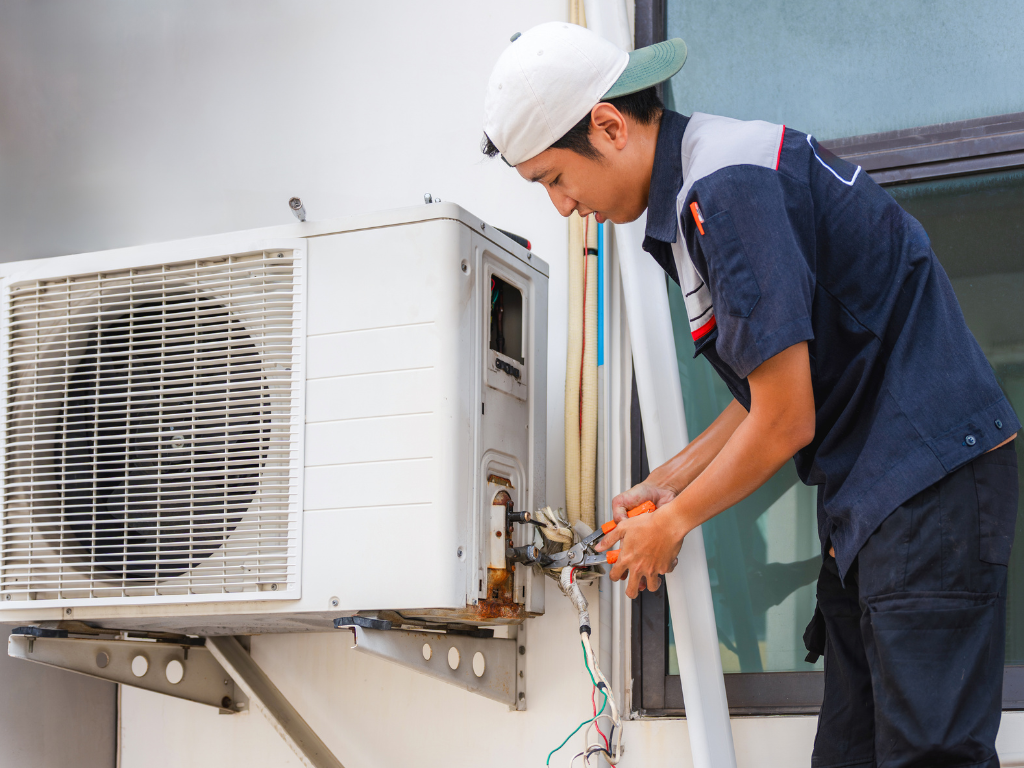
A 3-month interval is the standard aircon maintenance schedule for residential use in Singapore. Heavy commercial use (offices, F&B) shortens that to 6 weeks. Light use (a study room aircon switched on twice a week) can stretch to 4 months. Don’t go longer.
The northeast monsoon brings rain, cooler nights, and a tendency to switch the aircon off more. Owners assume this means less servicing is needed. In fact, the opposite is true. Standing condensate in idle drain pans grows mould, and that’s what hits you in April when you switch the unit back on at full load.
A visit in this window should cover fan coil dismantling, drain pan flushing with anti-bacterial solution, filter washing, and condenser coil cleaning. In short, this is the baseline of what a home aircon servicing visit actually includes.
April through June is when Singapore hits 33 to 35°C daytime highs and humidity stays above 75%. Aircons run 8 to 12 hours a day. Service before the heat arrives, not during it. Technician demand spikes in May, lead times double, and you’ll wait three to five days for an emergency visit you could have avoided.
This visit should include a refrigerant pressure check. A unit losing R32 at this point will struggle through July. Check drain gradient too. Condensate volume triples in this period which means any low spot in the drain line turns into a ceiling stain by August.
The southwest monsoon is hot, and the urban heat island effect in built-up estates (Bishan, Bedok, Toa Payoh) pushes indoor temperatures higher than weather data suggests. Even so, this is the visit most owners skip — and they shouldn’t
Focus on filter cleaning, blower fan inspection, and capacitor health for older units (5+ years). Capacitors fail in heat which means a $30 capacitor replacement now is a $400 compressor failure prevented later.
Use this slot for a deeper service or, if symptoms are showing, an aircon chemical wash. October to December is the right time because demand is lower, technicians have availability, and you want a clean system going into the December school holidays when usage spikes again.
If the unit smells musty, blows weak, or hasn’t had a chemical wash in 18 to 24 months, then this is the visit to upgrade. The signs an aircon needs a chemical wash are usually obvious by month 9 or 10 of the cycle.
The quarterly skeleton applies across HDB, condo, and small office. The differences are in unit count, configuration, and access.
Most HDB four- and five-room flats run a System 3 (1 outdoor + 3 indoor fan coils). Budget around $120 to $240 per quarterly visit for general servicing, or $480 to $960 per year.
Add one annual chemical wash for the bedroom unit that runs nightly, since that’s the fan coil that chokes first. Budget $90 to $130 per fan coil for the wash.
Total annual maintenance lands at roughly $570 to $1,090. The 2026 general aircon servicing price ranges in Singapore give a sharper picture when you’re comparing quotes from different contractors.
Condo installations often run a System 4 with one fan coil in each bedroom plus living. Newer developments use VRF systems with five or more indoor units. Even so, the schedule stays quarterly, with two additions.
First, a pressure test every 24 months for older System 4 setups. Joints in concealed trunking are where refrigerant leaks start — and because they’re concealed, you cannot see them. An aircon pressure test for System 4 and multi-split units catches a leak before it empties the refrigerant charge.
Second, check condenser placement. Condo condensers sit in service ledges, often in restricted airflow zones. Dust accumulates heavier here than at HDB ground level, so brush the condenser fins every visit, not every second visit.
Office aircons run 9 to 11 hours, five days a week. The cycling pattern matters because a unit that switches on hard at 8am and runs continuously until 6pm wears different parts than a residential unit doing short cycles overnight.
Schedule servicing every 8 weeks instead of every 12. Fan motors, contactors, and start capacitors are the failure points. A breakdown during a client meeting costs more than the entire annual servicing budget.
If symptoms show up between visits (weak cooling, unusual noise, ice on the pipes), don’t wait for the next scheduled date. The common causes when an aircon is not cold in Singapore usually point to a fixable issue that gets expensive if left running.
One-off servicing makes sense for a single guest bedroom unit used twice a month. For a master bedroom unit running nightly, contract servicing is cheaper and ensures the calendar actually gets followed.
A typical four-visit contract is the cheapest way to run an aircon maintenance schedule for a System 3 — around $260 to $400 per year, 15 to 25% cheaper than booking each visit separately.
Two constraints affect the schedule directly.
Refrigerant handling here requires NEA-approved technicians. R32 (the current standard refrigerant for new units) cannot be topped up by an unlicensed installer. R22 is being phased out, so units running it are increasingly hard to keep serviced. NEA’s guidance on ozone-depleting substances and refrigerant rules is the reference if you’re checking what your contractor is allowed to do.
Manufacturer warranties from Daikin, Mitsubishi, Panasonic, and LG usually require proof of servicing every 3 to 6 months by an approved technician. If you skip a visit and the warranty voids. Keep the receipts.
Climate Vouchers under the Singapore Green Plan framework can offset part of the cost when replacing units that no longer meet efficiency standards. Eligible HDB households can apply the voucher towards energy-efficient aircon purchase, which is worth factoring into the year you’re planning a replacement rather than another deep clean.
A 12-month aircon maintenance schedule in Singapore is four quarterly visits, one going deeper. Add a chemical wash for any unit running nightly, a pressure test every two years for System 4 setups, and a contract if you’re going to forget otherwise.
The cost of doing this is $500 to $1,200 a year for an HDB or condo. By contrast, the cost of skipping it is one compressor replacement at $1,200 to $1,800, plus a few breakdown weekends during the hottest months of the year. The maths is one-sided.
Book a servicing visit with SACES and lock in your aircon maintenance schedule for the next three dates in the same call.
Every 3 months for residential use, every 6 to 8 weeks for office use. Heavy use shortens the interval. A System 3 fan coil running 8+ hours nightly should not stretch past 12 weeks between visits, or the evaporator coil will start to choke.
For most HDB and condo households, yes. One chemical wash on the most-used fan coil (usually the master bedroom) per year keeps deep coil surfaces clean. Add a second wash on the living room unit if you run the aircon during the day.
A contract locks in four quarterly visits a year at a fixed total price, usually 15 to 25% cheaper than booking individually. One-off servicing is per-visit, useful for low-use units or a trial visit with a new contractor before committing to a contract.
In most cases, yes. Daikin, Mitsubishi, Panasonic, and LG warranties require proof of servicing every 3 to 6 months by an approved technician. Without service receipts, parts claims under warranty are usually rejected by the manufacturer.
No. The Climate Voucher under the Singapore Green Plan applies to new energy-efficient aircon purchases, not servicing or repair. If your unit is older than 10 years and inefficient, factor the voucher into the year you replace it.