
Aircon keeps tripping Singapore households dread because the cause sits between aircon fault and electrical fault. SCDF recorded 304 residential fires from electrical origin in 2025, 29% of all residential fires. A tripping aircon points to one of two trades: the aircon, or the electrical feeding it. This blog walks you through which one and what the fix costs, anchored to aircon electrical fault repair and troubleshooting.
Why does your aircon keep tripping? In Singapore homes, it usually means the unit is drawing excess current or leaking power to earth. Four common issues cause almost all cases:
Compressor Short: Broken motor windings draw 5 to 7 times the normal current. As a result, the MCB trips instantly on startup.
Capacitor Failure: A worn start capacitor stops the compressor from turning on smoothly. This draws prolonged high current and trips the MCB within seconds.
Earth Leakage: Water touches internal parts like the PCB or electrical box. Consequently, current leaks to earth and triggers the safety RCCB.
Circuit Overload: Sharing a line with heavy appliances (like washing machines) exceeds capacity. Therefore, the breaker trips when multiple devices run simultaneously.
Pro tip: Check which breaker tripped first. An MCB trip points to an electrical overload, whereas an RCCB trip warns of water leakage or insulation failure.
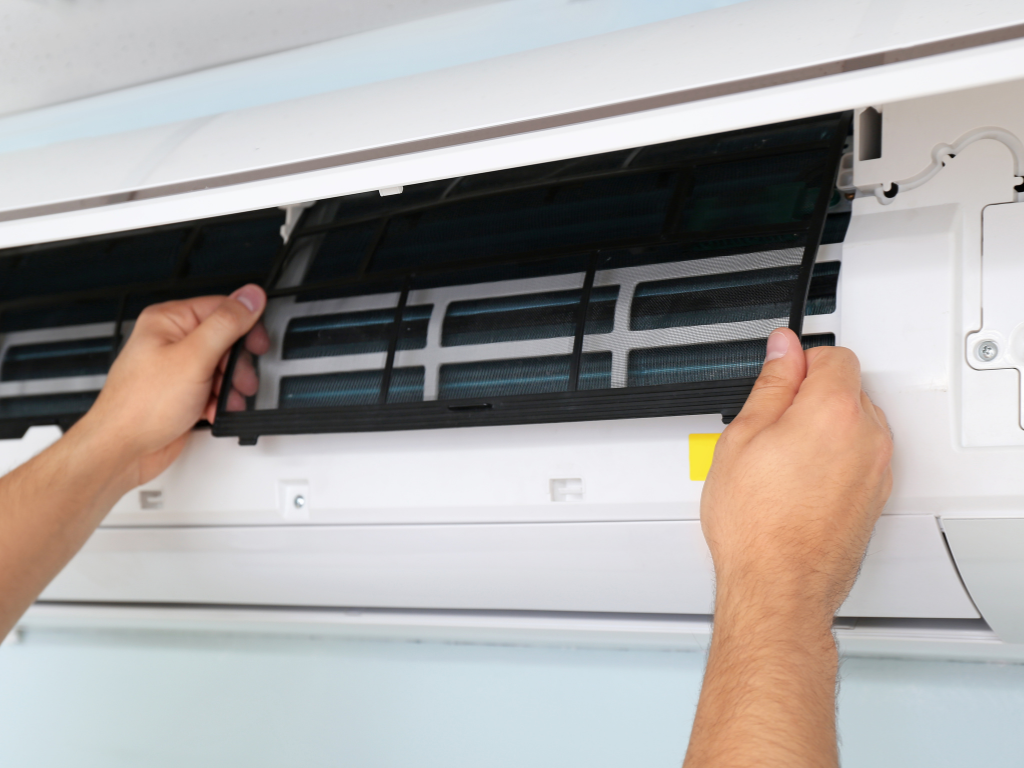
To find out who to call, run this simple 5-minute test:
Turn off the aircon at the wall isolator switch or unplug it.
Reset the tripped breaker.
Monitor the box for 24 hours.
If the breaker holds, the fault lies inside your aircon unit. Therefore, you should call a regular aircon contractor. However, if the breaker trips again while the aircon is disconnected, you have an electrical wiring fault or a shared circuit issue.
Singapore Safety Rule: In Singapore, fixing home wiring or distribution boards legally requires an EMA-licensed electrical worker (LEW).
While most regular aircon shops cannot touch your main electrical box, hiring a dual-licensed provider like SACES ensures they can diagnose and fix both issues in a single visit without delays.
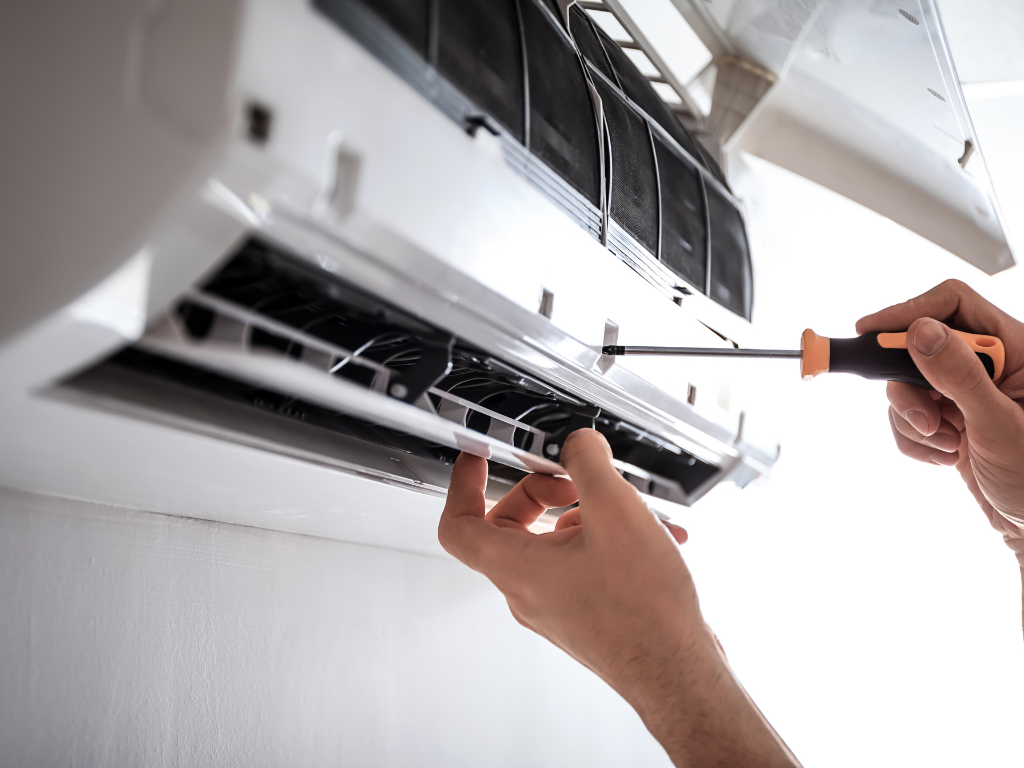
When only your aircon trips the MCB, the fault is safely isolated to that dedicated circuit. Identifying the exact timing of the trip helps determine the root cause:
Instant Trip (On Startup): Points to a compressor short or wiring damage. A 9,000 to 18,000 BTU aircon uses a 10A or 16A MCB. If a short spikes current to 20A, the breaker trips within milliseconds.
Delayed Trip (5–15 Seconds In): Suggests a failed start capacitor. The compressor draws prolonged high current trying to start until the MCB cuts power.
Degraded Breaker: Occasionally, the MCB itself wears out and trips below its rated capacity.
A technician will confirm the pattern, test the capacitor, and use a multimeter to check the compressor windings. If a unit is over 5 years old, replacing a failed compressor ($400 to $800) is often less economical than upgrading to a new aircon.
When your aircon trips the RCCB, it means current is leaking to earth. The breaker detects a tiny imbalance (30 mA or more) and cuts power within milliseconds to prevent a dangerous electric shock.
In Singapore, three common issues trigger this safety switch:
Water Ingress: A clogged drain pan overflows, sending water onto the PCB or motor windings. This often indicates your unit needs a chemical wash.
Insulation Breakdown: After 8 to 12 years, the protective coating on compressor windings degrades, leaking current directly to the grounded frame.
Damaged Pipe Lagging: Condensation builds up on bare copper pipes inside the ceiling, dripping onto electrical connections below.
Because an RCCB trip signals a live shock hazard, never just reset it and forget it. Always book a professional inspection immediately to ensure your home remains safe.
When an aircon trips the moment it turns on, the breaker is responding to severe overcurrent. A healthy compressor needs just 0.5 to 1 second to start up smoothly. If it trips instantly, the unit is drawing too much power right away due to one of three issues:
Capacitor Failure: This is the most common and affordable problem to fix ($80 to $150). A weak capacitor causes intermittent tripping before failing completely.
Compressor Short: The motor windings have completely failed. Replacing the compressor costs $400 to $800. Therefore, if your unit is over 5 years old, buying a new aircon is usually wiser.
Locked Rotor: The compressor is mechanically jammed by debris or damage. While letting it cool down occasionally resets the thermal lockout, the underlying mechanical fault still requires professional repair.
If your aircon runs for 10 to 60 minutes before tripping, the issue is sustained-load overcurrent or overheating, rather than initial startup power.
Three main issues typically cause this delayed pattern:
Dirty Condenser Coils: Blocked coils restrict heat rejection. Consequently, the compressor works harder, draws excess current, and stops cooling well.
Low Refrigerant: A lack of coolant forces the compressor to run continuously at peak load, triggering thermal protection.
Shared Circuit Overload: The breaker trips randomly when other heavy appliances turn on simultaneously.
Pro tip: Note the exact timing of the trip. A consistent 10-to-15 minute shutdown indicates a dangerously hot compressor running on thermal protection. Conversely, random trips usually point to an overloaded home circuit, while afternoon trips signal a system struggling under peak heat demand.
If your aircon runs for 10 to 60 minutes before tripping, the issue is sustained-load overcurrent or overheating, rather than initial startup power.
Three main issues typically cause this delayed pattern:
Dirty Condenser Coils: Blocked coils restrict heat rejection. Consequently, the compressor works harder, draws excess current, and stops cooling well.
Low Refrigerant: A lack of coolant forces the compressor to run continuously at peak load, triggering thermal protection.
Shared Circuit Overload: The breaker trips randomly when other heavy appliances turn on simultaneously.
Pro tip: Note the exact timing of the trip. A consistent 10-to-15 minute shutdown indicates a dangerously hot compressor running on thermal protection. Conversely, random trips usually point to an overloaded home circuit, while afternoon trips signal a system struggling under peak heat demand.
Repeatedly resetting a tripped breaker is highly dangerous. The breaker serves as a safety device, and forcing it back on compounds internal damage while creating a severe fire risk.
Every reset exposes the system to dangerous high-current cycles. For instance, it can carbonize shorted compressor windings or cause electrical arcing in earth leakage faults, drastically increasing the risk of ignition. In fact, SCDF recorded 304 residential fires of electrical origin in 2025—accounting for 29% of all home fires—with ignored tripping being a major contributor.
Follow this safe approach: if your breaker trips more than twice within 24 hours, stop resetting it. Switch the aircon completely off at the wall isolator switch. Then, book a professional inspection. A standard diagnostic visit costs just $60 to $120 and safely identifies whether you need an aircon technician or a licensed electrician.
Who can legally fix your tripping aircon in Singapore? It depends entirely on where the fault is located.
Aircon-Side Faults: Any competent aircon contractor can safely repair internal components like compressors, capacitors, or internal wiring.
Electrical-Side Faults: The Energy Market Authority (EMA) strictly requires a Licensed Electrical Worker (LEW) for any work touching fixed home wiring or the distribution board (DB box). A standard residential LEW handles capacities up to 45 kVA, which covers all HDB flats and most condominiums.
Regular aircon contractors legally cannot modify your home’s fixed wiring or DB box, even if they find the issue there; they must hand the job over to an electrician. Choosing a dual-licensed provider like SACES eliminates this issue. Their professional inspection covers both trades, allowing the same team to legally diagnose and repair the fault in one visit.
Cost depends on which component is at fault. Most fixes fall under $500; the expensive scenarios involve compressor replacement on older units.
| Fault | Repair cost (2026) |
| Capacitor replacement | $80 to $150 |
| Wiring repair at terminals | $60 to $120 |
| PCB replacement (water damage) | $250 to $550 |
| Compressor replacement (5-7 year old unit) | $400 to $800 |
| Compressor replacement (older than 7 years) | Often uneconomical; replace unit |
| MCB replacement (electrical side) | $80 to $150 plus LEW callout |
| RCCB replacement | $150 to $250 plus LEW callout |
| DB box rewiring | $300 to $700 depending on scope |
| Diagnostic visit (combined aircon plus electrical) | $60 to $120 |
For aircon-side faults on units under 7 years old, repair usually wins economically. For older units with compressor or PCB failure, replacement makes more sense because future failures stack up.
Repeated breaker resets without diagnosis can multiply the cost. A $120 capacitor that gets ignored becomes a $550 PCB by the time water damage from the resulting overheating fries the control board.
Aircon trips in Singapore split between aircon fault (compressor, capacitor, PCB, internal wiring) and electrical fault (MCB, DB box, fixed wiring). The breaker that tripped tells you which: MCB usually means aircon overcurrent, RCCB means earth leakage from water or insulation breakdown. Disconnect-and-test the aircon at the isolator to isolate the trade required. Don’t repeatedly reset; SCDF recorded 304 residential electrical fires in 2025, with repeat-trip patterns among the contributors.
Book a combined aircon and electrical diagnostic with SACES, and you’ll get a single visit that covers both sides without handing off mid-job.
Whole-house tripping means the main RCCB at the DB has detected earth leakage from somewhere, possibly your aircon. If the dedicated aircon breaker trips first, the cause is contained. If the main RCCB trips before the aircon breaker, the leakage is severe (above 30 mA at the main) and an EMA-licensed electrical worker should investigate immediately.
Rain-correlated tripping means water is reaching electrical components, usually at the outdoor condenser or the wall penetration where refrigerant pipes pass through. Common causes: degraded insulation on pipes inside the wall, damaged outdoor unit electrical cover, or water tracking down the refrigerant pipe into the indoor unit. Repair under $300 for sealing; over $500 if PCB is already damaged.
New aircon tripping means installation fault. Common causes: under-rated MCB selected for the unit’s actual draw, loose wiring at terminals causing intermittent short, shared circuit not isolated despite installation spec, or factory defect on the compressor. The installer is responsible at no charge within standard warranty. Document the timing.
Yes if ignored. Repeated trips at startup carbonise compressor windings further. Repeated trips during operation create heat cycles that stress the PCB and capacitor. A unit subjected to multiple trips weekly for several months typically needs major repair or replacement within 6 to 12 months.
Disconnect appliances one at a time at the isolator or plug. After each disconnection, reset the breaker and wait. The appliance disconnected when the breaker stops tripping is the culprit. If no single appliance causes the trip, the fault is in the wiring or the breaker itself. An EMA-licensed electrical worker handles the diagnostic for fixed wiring.